Julietano: A Timeless Handwritten Font for Every Workflow
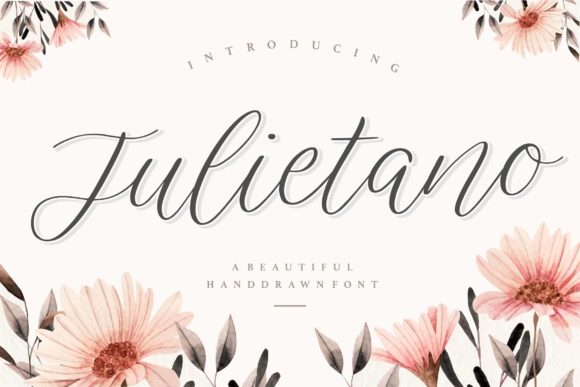
Julietano is a distinctive, delicate, and timeless handwritten font that brings a personal touch to any design. Its elegant script makes it ideal for wedding invitations, thank you cards, quotes, greeting cards, logos, and business cards. Whether you're working on a creative project or a professional task, Julietano adds a unique flair that enhances the overall aesthetic and emotional impact of your work.
Integrating Julietano into your workflow can be a powerful way to elevate the quality and consistency of your designs. From initial planning to final execution, this font offers versatility and adaptability across various applications. Understanding how to use Julietano effectively can help you streamline your process and achieve more polished results.
Understanding Julietano in the Design Process
Before diving into specific use cases, it's important to understand what makes Julietano stand out. Unlike standard typefaces, which are often rigid and uniform, Julietano mimics the natural flow of handwriting. This characteristic makes it particularly well-suited for projects that require a personal or artistic touch. It bridges the gap between digital precision and human expression, offering a balance that many designers find appealing.
When considering where to apply Julietano, think about the context of your project. For instance, if you're designing a wedding invitation, the font can convey warmth and intimacy. In a business setting, it might add a touch of sophistication without being overly casual. The key is to match the tone and purpose of your work with the visual style of the font.
Using Julietano in Different Stages of a Project
Julietano can be integrated at multiple stages of a project, depending on your needs and goals. During the planning phase, it can help visualize the final look of a design. When creating mockups or concept sketches, using Julietano allows you to test how the font interacts with other elements like colors, layouts, and graphics.
During the execution phase, Julietano can serve as a primary text element or a complementary detail. For example, in a logo design, it might form the main text while other elements provide contrast and structure. In a greeting card, it could be used for the main message or as an accent to highlight key phrases.
After the project is complete, Julietano can still play a role in quality control and refinement. Reviewing your work with the font in place helps ensure that it aligns with your vision and meets your standards. It also allows you to check for consistency across different formats and platforms.
Julietano and Other Design Tools
Julietano works well with a variety of design tools and platforms. Whether you're using graphic design software like Adobe Illustrator or Canva, or working with print materials, the font maintains its integrity and readability. Its compatibility with different file formats ensures that it can be used seamlessly across projects.
When combining Julietano with other fonts or design elements, consider the hierarchy and balance of your composition. Pairing it with a clean, modern typeface can create a striking contrast that draws attention to key details. Alternatively, using it alongside other handwritten fonts can add depth and variation to your design.
For digital projects, such as websites or social media posts, Julietano can be used to add a personal touch to headings, captions, or callout text. However, it's important to ensure that it remains legible at different sizes and resolutions. Testing it in various contexts will help you determine the best way to incorporate it into your workflow.
Practical Implementation Tips
To get the most out of Julietano, start by identifying where it will have the greatest impact. If you're working on a branding project, consider using it for taglines or signature elements. For personal projects, such as journaling or handmade crafts, it can add a unique and authentic feel.
When preparing your design, take time to experiment with different styles and variations of Julietano. Some versions may have more flourishes or curves, while others are more minimal. Choosing the right variant depends on the mood and message you want to convey.
Organization is also key when using Julietano. Keep track of where it's been used and how it looks in different formats. This will help maintain consistency and prevent errors, especially when working on large or multi-part projects.
Workflow Examples and Observations
Consider a scenario where a small business owner is creating a series of marketing materials. By incorporating Julietano into their branding, they can differentiate themselves from competitors and create a more memorable identity. Using the font consistently across all materials—such as business cards, social media posts, and email newsletters—helps reinforce brand recognition and trust.
In a creative writing context, an author might use Julietano for book covers or promotional images. This not only adds a visual element but also reflects the personal and artistic nature of the work. It can make the design feel more intimate and connected to the content.
For educators or trainers, Julietano can be used in lesson plans, handouts, or presentation slides to make the material more engaging. Its handwritten style can make information feel more approachable and less formal, which can be beneficial in certain learning environments.
Long-Term Use and Maintenance
Over time, the effectiveness of Julietano in your workflow may depend on how well it's maintained and updated. As design trends evolve, it's worth revisiting how the font fits into your current projects and whether any adjustments are needed. Staying aware of these changes can help you keep your designs fresh and relevant.
Maintaining consistency is also important when using Julietano over an extended period. Ensuring that it's applied uniformly across all materials helps build a cohesive visual identity. This is especially crucial for businesses or brands that rely on strong and recognizable imagery.
Finally, always consider the audience when using Julietano. While it may be perfect for one type of project, it might not be suitable for another. Understanding your audience's preferences and expectations can guide you in making the best decisions about when and how to use the font.